



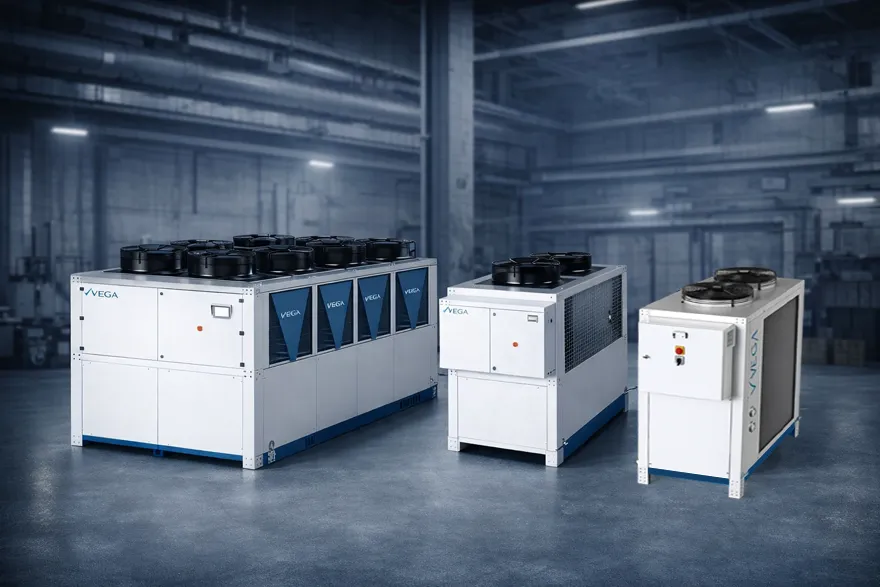
When it comes to industrial cooling and HVAC systems, one of the most critical pieces of equipment that comes to mind is the chiller system. From food production facilities to hospitals, and from data centers to factories, chiller units are used across many sectors to ensure that processes operate efficiently, safely, and sustainably.
In this article, we will provide a detailed and technical overview of what a chiller is, how a chiller system works, what types of chiller systems exist, and how to select the right chiller system.
What Is a Chiller?
A chiller is a cooling system that lowers the temperature of a liquid—typically water or a water-glycol mixture—and uses this chilled liquid in air conditioning or industrial processes. Chiller systems perform the cooling process by absorbing heat from one environment and transferring it to another.
In simple terms, a chiller is a central cooling unit that provides temperature control for large spaces or sensitive production processes.
Main Purpose of Chiller Systems
- To ensure stable operation of industrial processes
- To protect product quality
- To improve energy efficiency
- To prevent heat-related equipment failures
How Does a Chiller System Work?
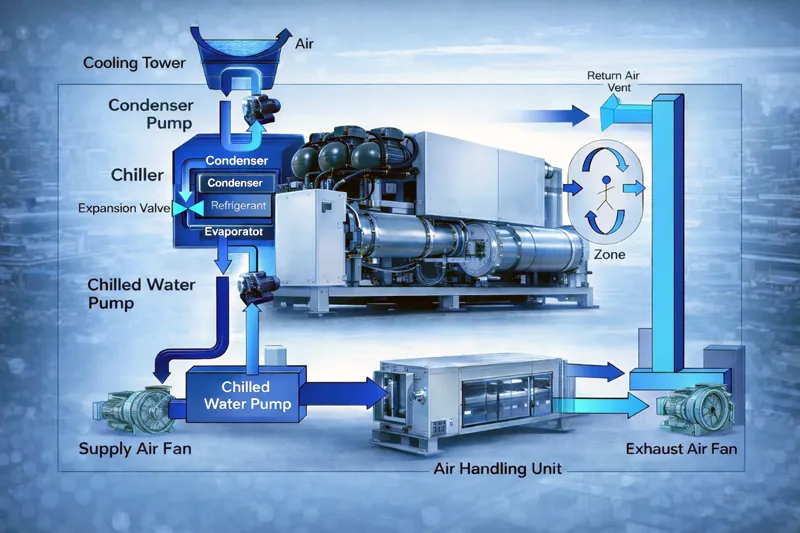
A chiller system basically operates according to the vapor-compression refrigeration cycle. The system transfers heat by means of a refrigerant circulating within a closed loop.
Chiller Operating Principle
The operating process of a chiller system consists of four main stages:
1. Compressor
The compressor compresses the low-pressure, low-temperature refrigerant and turns it into a high-pressure, high-temperature state. This stage is the heart of the system and directly affects chiller performance.
2. Condenser
The high-temperature gaseous refrigerant condenses inside the condenser, releases its heat to the outside environment, and turns into a liquid. This heat transfer can be carried out by means of air or water.
3. Expansion Valve
As the liquid refrigerant passes through the expansion valve, its pressure drops. This pressure reduction cools the refrigerant and prepares it for evaporation.
4. Evaporator
The low-pressure refrigerant evaporates in the evaporator while absorbing heat from the environment. At this stage, the water is cooled, and the chilled water is sent through the system to the areas where it will be used.
Main Components of a Chiller System
For a chiller system to operate efficiently, all components must work in harmony.
Basic Chiller Components
- Compressor
- Condenser
- Evaporator
- Expansion valve
- Pump group
- Control panel
- Refrigerant
What Are the Types of Chillers?
Chiller systems are divided into different types according to their application area, cooling method, and condenser type.
Air-Cooled Chiller
In air-cooled chiller systems, the condenser is cooled by ambient air. These systems are especially preferred because they are easier to install outdoors.
Advantages
- Easy to install
- No cooling tower required
- Lower initial investment cost
Disadvantages
- Efficiency drops at high outdoor temperatures
- Noise level is higher
Water-Cooled Chiller
Water-cooled chiller systems use water on the condenser side and generally operate together with a cooling tower.
Advantages
- Higher energy efficiency
- Longer system life
- More stable operation
Disadvantages
- Higher installation cost
- Maintenance requirements are greater
Where Are Chillers Used?
Chiller systems have a very broad range of applications and play a critical role across different sectors.
Chiller Application Areas
- Industrial manufacturing facilities
- Hospitals and healthcare institutions
- Data centers
- Shopping malls and hotels
- Food and beverage production plants
- Plastic injection and metal industry
How Should Chiller Selection Be Made?
Choosing the right chiller is extremely important for ensuring that the system operates efficiently and has a long service life.
Key Factors to Consider When Selecting a Chiller
- Cooling capacity (kW or kcal/h)
- Ambient operating temperature
- Energy efficiency (COP / EER)
- Application area and process requirements
- Service and spare parts support
The Importance of Energy-Efficient Chiller Systems
With the rise in energy costs today, high-efficiency chiller systems have become indispensable for businesses. A properly designed chiller system not only reduces energy consumption, but also lowers the carbon footprint.
Factors That Improve Energy Savings
- Inverter compressor technology
- Smart control systems
- Correct capacity selection
- Regular maintenance and service
Why Are Chiller Systems So Critical?
Chiller systems are an indispensable part of modern industrial and commercial facilities. A properly designed chiller system with high-quality components and professional installation provides businesses with long-term advantages in the form of high efficiency, lower costs, and reliable operation.
As Vega Chiller, we aim to deliver maximum efficiency in industrial cooling through high-performance chiller solutions designed specifically for each application.