Applications
Chiller HVAC Air Conditioning: A Professional Application Guide to Central Cooling Systems
To maintain comfort conditions, manage indoor air quality, and keep operating costs under control in large-scale buildings, HVAC air conditioning systems play a critical role. In high-area projects such as shopping malls, hotels, hospitals, airports, business centers, residential developments, and industrial office campuses, cooling demand often exceeds the limits of conventional split or VRF solutions. At this point, the most robust solution is chiller-based HVAC cooling infrastructure.
VEGA Chiller aims to deliver long-life solutions for central cooling projects through proper capacity planning, high efficiency, sound hydronic design, automation integration, and a sustainable maintenance approach. In this guide, we will examine in detail the role of chillers in HVAC systems, the types of facilities in which they should be preferred, how they should be selected, and the engineering practices that improve overall system efficiency.
Chiller HVAC Air Conditioning: What is Chiller HVAC Air Conditioning and Why is it Preferred?
Chiller is a central cooling system that cools a fluid (typically water or a water–glycol mixture) to a specified temperature and distributes this chilled water to the building’s air conditioning equipment. In HVAC applications, chillers commonly supply AHU (Air Handling Unit), FCU (Fan Coil Unit), CRAH, and other heat exchangers used for comfort or process cooling.
Chiller-based HVAC systems stand out in large buildings due to the following advantages:
- Scalable capacity to efficiently handle large cooling loads
- Centralized management for easier operation and maintenance
- High COP/EER and strong part-load performance for lower energy costs
- BMS automation integration for intelligent control
- Reduced refrigerant circulation in indoor units, providing higher safety and serviceability
Where Are Chiller HVAC Systems Used?
Chiller systems are one of the most suitable solutions for projects characterized by large floor area and high simultaneous usage.
Typical application areas include:
Shopping Malls and Large Commercial Buildings
In shopping malls, cooling loads fluctuate significantly due to varying visitor density and different tenant requirements. Chiller-based systems maintain comfort while optimizing energy consumption through advanced load control strategies.
Hotels and Resorts
In hotels, comfort standards directly affect customer satisfaction. Fan-coil based room solutions and central AHU systems supplied by chillers provide quiet and stable air conditioning. Central systems also simplify maintenance management in seasonal operations.
Hospitals and Healthcare Facilities
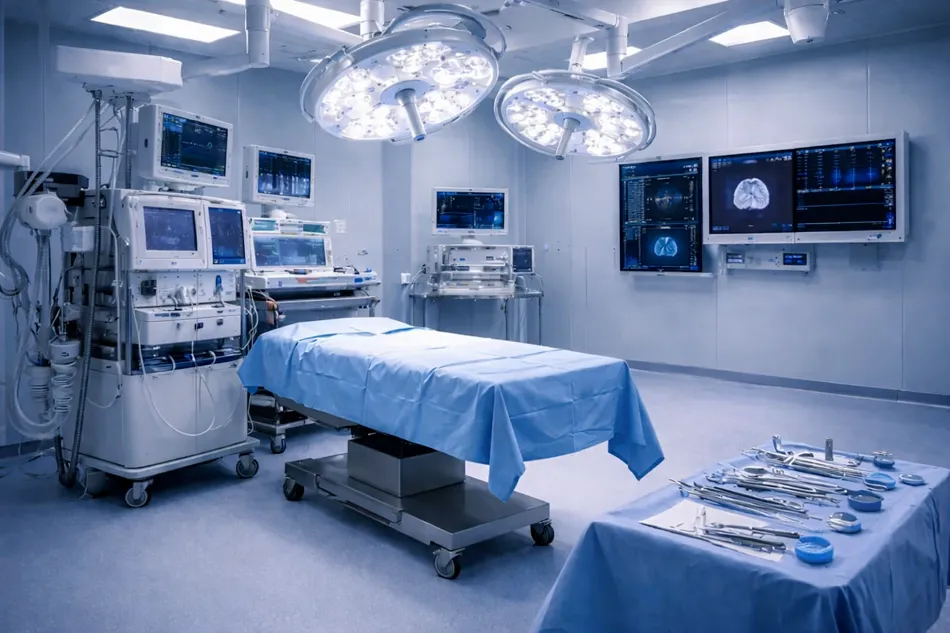
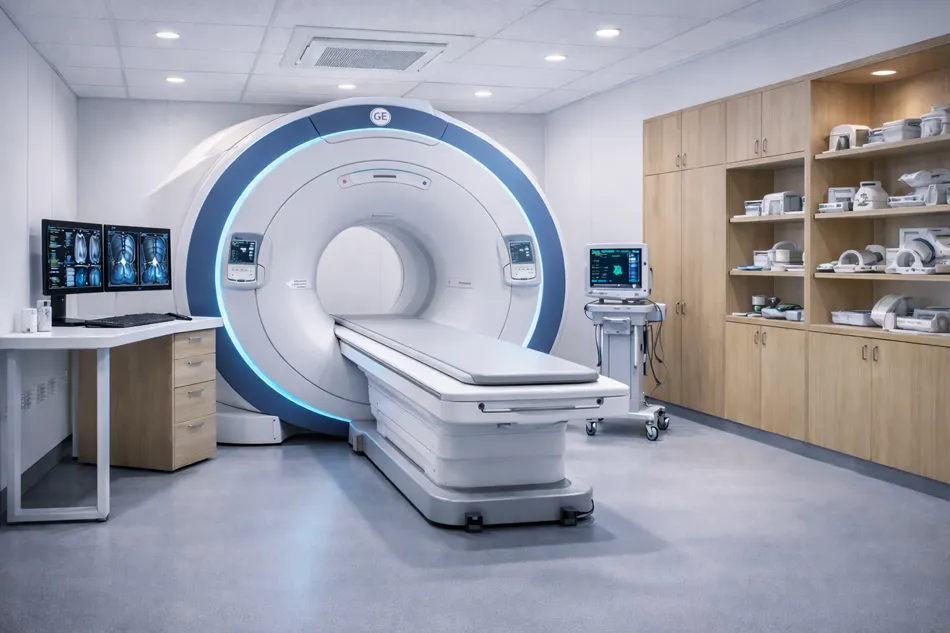
In hospitals, not only temperature but also humidity control, filtration, and fresh air management are critical. Operating rooms, ICUs, laboratories, MRI/CT rooms, and similar areas require stable HVAC conditions. Chillers reliably supply the AHU systems serving these critical zones.
Airports, Terminals, and Public Buildings
Due to large volumes and high occupancy, central cooling systems are standard in airports. Chiller solutions provide continuous comfort through zoning, load sharing, and redundancy architecture.
Office Campuses and Residential Complexes
In large office buildings and residential projects, chillers allow centralized cooling production with distributed delivery, ensuring both efficiency and user comfort. In mixed-use projects (office + residential + social areas), chiller infrastructure offers a sustainable long-term solution.
Core Components and Hydronic Design in Chiller HVAC Systems
The performance of a chiller HVAC system depends not only on the unit itself, but also on proper hydronic design.
In the VEGA Chiller approach, the system is treated as a whole: chiller + pumps + piping + balancing + automation + terminal units.
Chilled Water Loop
The chiller produces water at a defined supply temperature (for example 7°C).
The water absorbs heat in AHU/FCU coils and returns warmer (for example 12°C).
This temperature difference is defined as ΔT (Delta T), which is critical for both capacity and energy efficiency.
Variable Flow Pumps and VFD Control
Modern HVAC projects use variable flow (VFD-controlled) pumps instead of constant flow systems.
When load decreases, flow decreases, and pump power drops significantly, improving part-load efficiency.
Balancing Valves and Pressure Control
In large buildings, balancing valves, differential pressure control, and correct pipe sizing ensure proper water distribution.
Poor hydronic balance can cause insufficient cooling in some zones and excessive flow in others.
Application Note: Low ΔT Syndrome
One of the most common HVAC problems is low ΔT.
If terminal units are misadjusted or coils are dirty, return water temperature may be lower than expected, forcing the chiller to run at higher flow rates and reducing efficiency.
Proper maintenance and automation strategies minimize this issue.
Chiller Selection Criteria: Capacity, COP/EER, Noise, and Installation
Capacity Planning and Chiller Sizing
Chiller capacity must be determined according to total building load, including outdoor conditions, glazing area, occupancy, lighting, equipment loads, and fresh air requirements.
Incorrect sizing increases both investment cost and operating inefficiency.
COP/EER and Part-Load Efficiency
Chillers in HVAC systems usually operate at part load.
Therefore, not only nominal COP/EER but also part-load performance must be evaluated.
Inverter compressors, fans, and pumps significantly improve efficiency.
Noise Level and Location Constraints
In hotels, residences, and urban projects, sound level is critical.
Proper placement, acoustic barriers, fan selection, and vibration isolation must be considered.
Low noise operation is often required for project approval.
BMS Integration and Smart Control
Energy efficiency in chiller HVAC systems largely depends on automatic control and BMS (Building Management System) integration.
Setpoint optimization, pump/fan speed control, alarm monitoring, and energy tracking improve operational efficiency.
Setpoint Optimization and Night Mode
During low occupancy periods, setpoints can be optimized to reduce compressor load while maintaining comfort and air quality.
Maintenance and Service in Chiller HVAC Systems
Central systems are long-life assets, but performance depends on regular maintenance.
Dirty heat exchangers, incorrect refrigerant charge, sensor errors, and clogged filters reduce efficiency.
The VEGA Chiller maintenance approach is based on performance measurement, trend analysis, and preventive service.
Periodic Maintenance Scope
- Condenser and evaporator cleaning
- Refrigerant pressure check, leak test, and charge verification
- Compressor oil level and oil quality inspection
- Pump and fan checks, electrical measurements
- Sensor calibration and automation tests
- Flow and ΔT measurement with performance reporting
VEGA Chiller HVAC Project Engineering Approach
VEGA Chiller considers chiller systems together with hydronic and automation infrastructure.
The goal is to maintain stable comfort conditions while minimizing operating cost and ensuring sustainable maintenance.
Survey, Design, and Commissioning
Load calculation, zoning, piping, pump selection, redundancy strategy, and BMS integration are planned.
During commissioning, flow, ΔT, and setpoint stability are verified to ensure target performance.
Conclusion: Chiller HVAC Cooling is the Most Efficient Central Cooling Solution for Large Projects
In shopping malls, hotels, hospitals, and large office projects, chiller HVAC cooling provides the best balance of comfort, efficiency, and controllability.
With proper sizing, hydronic design, BMS integration, and regular maintenance, energy consumption is reduced, comfort is stabilized, and operational risk is minimized.
VEGA Chiller delivers long-term, reliable, and high-efficiency cooling solutions with an engineering-focused approach to central HVAC projects.