Applications
Chiller Cooling for MRI Systems: A Professional Application Guide to Medical Cooling for MRI Systems
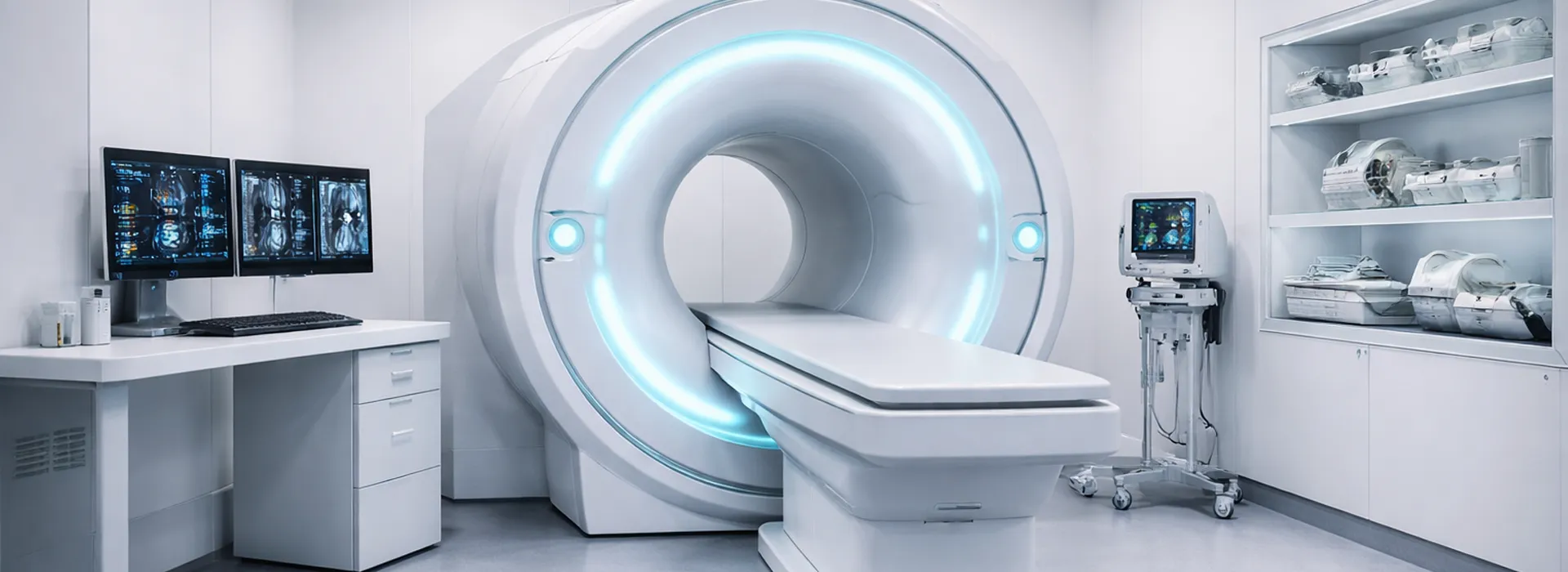
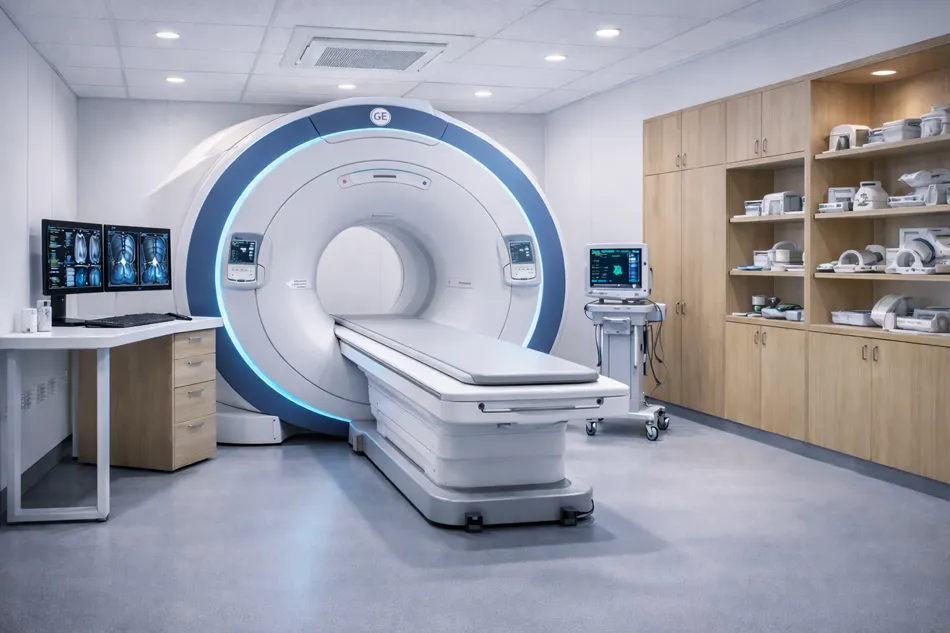
In healthcare facilities, the continuous and stable operation of imaging systems is critical for both patient safety and operational continuity. In particular, MRI (Magnetic Resonance Imaging) systems require controlled thermal management due to their highly sensitive electronic components, power electronics modules, gradient drivers, and auxiliary subsystems. At this point, chiller-based MRI cooling infrastructure becomes one of the core engineering elements that ensures stable system operation.
VEGA Chiller integrates stable temperature control, safe operation, redundancy, remote monitoring, and preventive maintenance principles in industrial cooling solutions designed for medical applications. In this guide, we examine at a professional level why MRI chiller systems are required, which components need to be cooled, the critical criteria for proper chiller selection, and the operating strategies that reduce the risk of failure.
Chiller Cooling for MRI Systems: Why Is MRI Cooling Performed with a Chiller?
MRI systems contain high-power electronic drivers and sensitive control systems. During operation, these systems generate heat, and if that heat is not removed effectively, the following risks may arise:
- Image quality degradation and increased risk of artifacts
- Approaching thermal limits in gradient drivers and reduced performance
- Loss of stability in RF components and unexpected faults
- Premature failure of electronic boards and power modules
- Appointment cancellations and operational losses due to unplanned downtime
For this reason, MRI cooling systems are not intended for comfort cooling; they are a critical infrastructure that ensures the operational safety and stability of the equipment.
The chiller removes heat safely through a controlled water or water-glycol circuit and keeps the MRI system within its target temperature range.
Which Components Are Covered by Chiller-Based MRI Cooling?
In MRI systems, the cooling requirement is not limited to a single module. Although the application varies depending on the system configuration and manufacturer architecture, chiller integration is typically found in the following subsystems:
Power Electronics and Gradient Drivers
Gradient systems generate rapid magnetic field changes during MRI imaging, and this process requires high power.
Power modules and drivers generate significant heat during operation. Without stable cooling, thermal protection may be triggered, limiting performance.
RF (Radio Frequency) Components and Electronic Panels
RF modules and sensitive electronic boards are highly sensitive to temperature fluctuations.
Thermal stability has a direct impact on signal stability, image quality, and overall system reliability.
Helium Compressor and Auxiliary Cooling Circuits
Depending on the MRI configuration, auxiliary cooling elements may be required for the cryogenic infrastructure.
The objective is to maintain critical components within suitable operating conditions. The chiller also provides stable heat rejection for these auxiliary circuits.
Application Note: MRI Room HVAC Should Not Be Confused with the Chiller System
HVAC in the MRI room is necessary for patient comfort and ambient conditions; however, it may not by itself meet the process cooling requirements of the MRI system’s electronic and power modules.
For this reason, in MRI cooling applications, the chiller is often positioned as a separate and critical system.
Chiller Selection for MRI: Capacity, Stability, and Safety Criteria
Proper Capacity Planning and Chiller Capacity Calculation
MRI chiller selection should be based on the system’s nominal heat load and operating scenarios. Imaging protocols, scan intensity, and peak operating conditions can all affect the thermal load.
Therefore, during the chiller capacity calculation process, not only catalog data but also the hospital’s actual usage profile should be considered.
Undersizing may lead to thermal alarms and downtime. Oversizing, on the other hand, may result in poor part-load efficiency and unnecessary capital cost.
Temperature Stability and Tolerance Management
In MRI systems, the objective is not only to cool but to maintain temperature with stability.
In many medical applications, temperature fluctuation can push electronic components toward their operating limits.
For this reason, the chiller control system should be supported by precise sensors, stable setpoint management, and well-defined alarm scenarios.
Water/Glycol Circuit, Flow Rate, and ΔT Optimization
In medical environments, a water-glycol mixture may be used to protect against freezing risk. However, as the glycol ratio increases, viscosity rises and heat transfer performance is affected.
For this reason, the correct mixture ratio, target temperature range, and piping/hydronic design must be evaluated together.
In addition, optimization of flow rate and ΔT (Delta T) determines the efficiency and stability of chiller operation.
Insufficient flow reduces heat transfer, while excessive flow may result in unnecessary pump energy consumption.
Redundancy (N+1) and Operational Continuity
In hospitals, MRI equipment is a high-value asset with a dense appointment schedule. Unplanned downtime can create major operational losses.
For this reason, in critical projects, N+1 redundancy, dual pumps, standby fans, or backup chiller strategies should be evaluated.
VEGA Chiller supports the design of redundancy architecture according to the facility’s risk tolerance and SLA targets.
Installation and Integration: Correct Implementation of MRI Chiller Systems
In MRI chiller systems, installation is not limited to equipment placement; piping, insulation, filtration, sealing, and control integration must all be handled holistically.
Improper installation may lead to problems such as vibration, leakage, low flow, and sensor errors.
Pipe Insulation and Corrosion Management
Hygiene and safety expectations are high in medical environments. If proper insulation is not applied to piping, condensation may occur and moisture-related issues may develop around the equipment.
In addition, if water quality is not controlled, corrosion and sediment buildup may reduce heat exchanger efficiency and negatively affect chiller performance.
Filtration and Water Quality
Since MRI systems contain sensitive equipment, the risk of particles and sediment entering the circuit must be minimized.
Filtration protects pumps, valves, and heat exchanger surfaces, thereby ensuring both stable operation and long service life.
Automation, Alarm, and Remote Monitoring
Alarm management is critical in MRI chiller applications.
Pressure, temperature, flow, and electrical values should be monitored so that risks can be detected early.
With remote monitoring integration, the technical team can respond rapidly to potential issues and minimize system downtime.
Maintenance and Service: The Key to Continuity in MRI Cooling
In MRI chiller systems, maintenance is not merely a routine periodic task; it is a safeguard that ensures the continuity of imaging services.
Without regular maintenance, heat transfer loss, increased energy consumption, and higher failure risk become inevitable.
What Should Be Included in Periodic Maintenance?
- Condenser/evaporator cleaning and heat transfer inspection
- Refrigerant pressure checks, leak testing, and charge verification
- Measurements of pumps, fans, and electrical panels
- Sensor calibration and control panel alarm testing
- Performance verification through flow rate and ΔT measurements
- Filter inspection and monitoring of water/glycol circuit quality
Reducing Downtime Risk with Planned Maintenance
In hospital operations, planned maintenance should be scheduled in coordination with the appointment calendar.
In this way, the risk of system downtime is reduced, the need for emergency service intervention decreases, and total cost of ownership remains under control.
VEGA Chiller’s Engineering Approach to MRI Cooling Projects
VEGA Chiller approaches MRI cooling projects through an integrated framework that includes correct capacity selection, stable temperature management, safe hydronic design, and remote monitoring/maintenance processes.
The goal is to ensure stable MRI operation and uninterrupted imaging service.
Site Survey and Design
The most suitable chiller architecture is determined by analyzing the system heat load, usage profile, installation area, piping distances, and facility infrastructure.
Commissioning and Verification
During commissioning, flow rate, temperature stability, alarm scenarios, and safety components are tested to validate the system.
This ensures that the MRI chiller system delivers reliable performance under actual operating conditions.
The Right Chiller for MRI Cooling Secures Service Continuity
Chiller-based MRI cooling is a critical part of medical imaging infrastructure.
With proper capacity planning, stable setpoint management, appropriate water/glycol circuit design, redundancy strategies, and regular maintenance, downtime risk in MRI systems is reduced, image quality is protected, and operational continuity is ensured.
VEGA Chiller delivers reliable and long-life chiller solutions for medical cooling applications through its engineering-focused approach.