Applications
Chiller Systems for Shopping Mall Cooling: Comprehensive Application Guide for Central Cooling Systems in Shopping Mall HVAC Projects
Shopping malls are among the most challenging building types in HVAC engineering. This is because the load profile in malls is not constant: visitor density changes hourly, internal heat loads vary from one store to another, solar gains fluctuate along the façade, door traffic increases the fresh air load, and areas such as restaurants and food courts create additional heat and humidity loads. This variability makes it essential to maintain comfort standards, manage energy costs, and ensure operational continuity at the same time.
That is why shopping mall chiller cooling applications are among the most widely used and most effective solutions in large-scale mall projects. Chiller-based central cooling systems can handle high capacities, provide flexible distribution across zones, operate efficiently at partial loads through BMS automation, and deliver uninterrupted comfort through properly designed redundancy architectures. VEGA Chiller aims to provide long-lasting HVAC infrastructure for shopping mall projects through capacity planning, hydronic design, staging strategy, energy efficiency, acoustic requirements, remote monitoring, and planned maintenance.
In this comprehensive guide, we examine in detail—through a professional lens—where chillers are used in shopping malls, how to select the right chiller, which control strategies stand out in variable load management, which applications improve energy efficiency, and how maintenance discipline should be structured.
Chiller Systems for Shopping Mall Cooling: Why Have Chillers Become a Standard Solution for Mall Cooling?
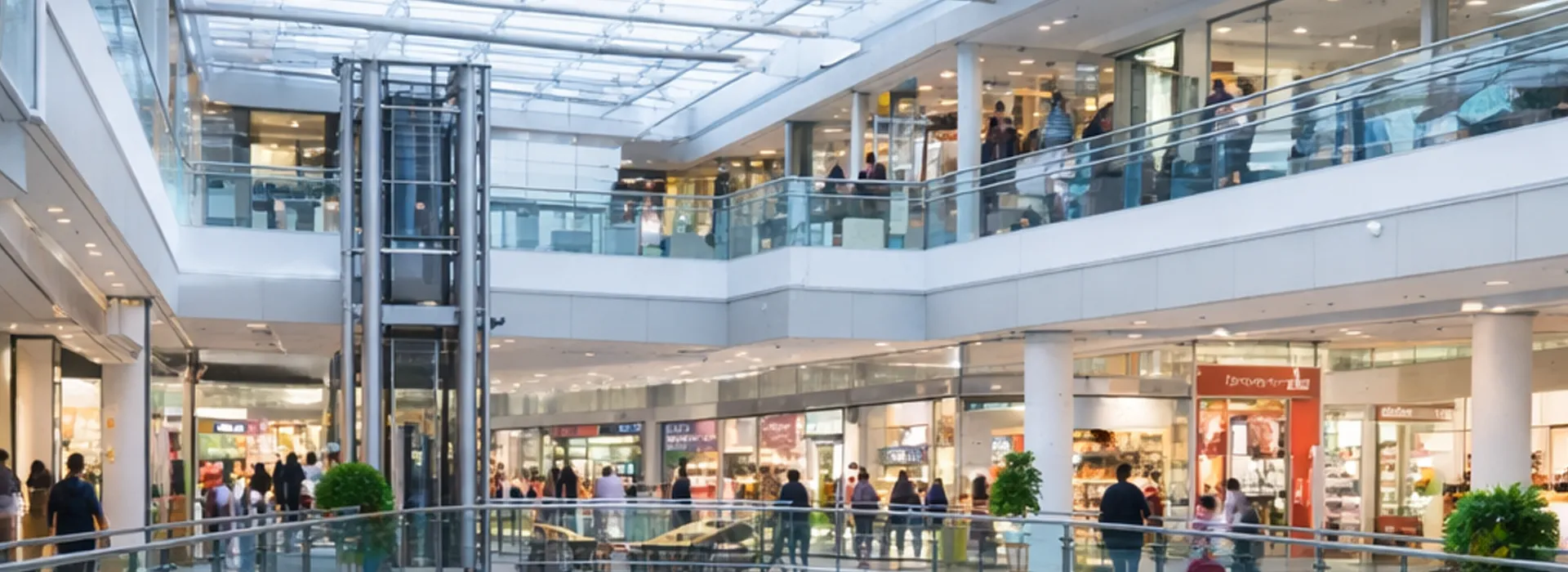
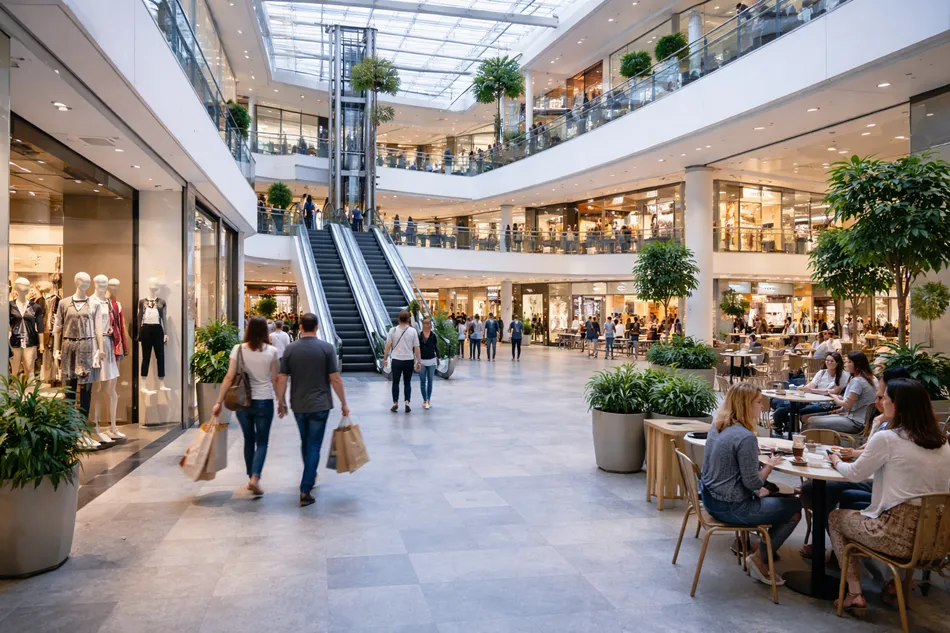
Shopping malls operate like a “mini city,” with numerous stores, large common areas, high-ceiling atriums, cinemas, entertainment zones, restaurants, and service areas.
This scale and diversity make central cooling highly advantageous. In chiller systems, cooling energy is distributed throughout the building via chilled water,
providing more controlled and manageable air conditioning across large spaces.
- High capacity: Stable cooling performance across large floor areas
- Adaptation to variable loads: Staged operation according to visitor density
- Zoning: Flexible distribution to different zones such as stores, common areas, cinemas, and food courts
- BMS integration: Energy monitoring, alarm management, and automation
- Redundancy: Uninterrupted service with N+1 architecture
- Maintenance management: Planned service and high continuity through centralized equipment
Application Areas of Chiller Shopping Mall Cooling
In shopping malls, cooling demand is not limited to a single area. The central chiller system supplies many points, from fresh air conditioning in common areas
to terminal units inside stores, and from cinema halls to technical rooms.
1) Common Areas and Atriums (High-Volume Cooling with AHU)
Atriums and large common spaces are among the most characteristic areas of shopping malls. These spaces typically have high ceilings and high solar gain due to extensive glass surfaces.
In addition, visitor density varies throughout the day. AHU (Air Handling Unit) systems condition fresh air using the chilled water provided by the chiller,
maintaining temperature and humidity within the target range. In atriums, air distribution and the risk of stratification must also be considered;
therefore, proper diffuser selection and automation strategies should be designed carefully.
2) Stores and Tenant Areas (FCU / VAV / AHU Integration)
Stores in shopping malls have different sizes and internal heat loads. Lighting, display equipment, occupant density, and operating hours vary.
For this reason, fan-coil (FCU) or VAV/AHU-based solutions are used in store areas. The chiller system distributes the required cooling capacity to tenant zones
in a controlled manner, ensuring zone-based comfort management.
3) Food Courts and Restaurant Areas (High Heat + Humidity Load)
Food court sections are among the areas with the highest heat and humidity loads within a mall. Kitchen exhaust systems, cooking equipment, and heavy foot traffic
increase the cooling demand. In these areas, fresh air ratio and dehumidification strategy are critical. AHUs supplied by the chiller
support both temperature control and humidity management to maintain comfort.
4) Cinema Halls and Event Areas (Sudden Load Increases)
In cinema halls, loads can rise suddenly depending on screening times. Due to occupant density, projection equipment, and ventilation requirements,
a high cooling demand may develop within a short time. The chiller system must manage these fluctuations through control strategies capable of fast response at partial load.
5) Technical Rooms and IT Spaces (Reliable Cooling)
In shopping malls, BMS rooms, security systems, network infrastructure, and certain technical spaces may require continuous cooling.
Uninterrupted cooling is critical in these areas; otherwise, operational risks may arise. The central chiller system can ensure cooling for these critical spaces
through appropriate redundancy and monitoring infrastructure.
Application Note: Humidity Management Is a “Hidden” Comfort Factor in Shopping Malls
In shopping malls, not only temperature but also humidity determines the perception of comfort. High humidity creates a stuffy feeling, increases energy consumption,
and may cause condensation risks in certain zones. For this reason, in chiller + AHU combinations, dehumidification capacity and control strategy must be designed properly.
Chiller Selection: Capacity and Load Profile Analysis in Shopping Mall Projects
Chiller Capacity Calculation: The Right Methodology for Shopping Malls
Chiller capacity calculation in mall projects should not be based solely on total square meter area.
The building’s façade characteristics, glazing ratio, atrium volume, fresh air load, store diversity, restaurant areas, cinema halls,
parking garage ventilation, and climate data must all be evaluated together.
The most critical point is to model the mall’s load distribution correctly during both “peak hours” and “low-density” scenarios throughout the day.
Incorrect capacity selection leads to two types of problems:
- Insufficient capacity: Loss of comfort during peak hours, increased complaints, tenant dissatisfaction
- Excess capacity: Unnecessary investment cost, low part-load efficiency, and high operating expenses
N+1 Redundancy: A Critical Standard for Continuity in Shopping Malls
In malls, HVAC failure directly affects visitor experience and store operations. For this reason,
the N+1 redundancy approach is common in chiller infrastructure. When one unit is out of service, the remaining units should still be able to maintain the minimum comfort level.
Redundancy should also be considered for pumps, electrical panels, and control components.
Air-Cooled or Water-Cooled Chiller?
In mall projects, the choice depends on layout, water management, energy targets, and maintenance approach:
- Air-cooled chiller: Easy installation, no water consumption, fast commissioning
- Water-cooled chiller: High efficiency at large capacities, but requires a cooling tower and water treatment
In very large projects and malls operating continuously under high load, water-cooled systems may offer an efficiency advantage.
However, the decision should be made based on total cost of ownership (CAPEX + OPEX).
Hydronic Design: The Key to Real Performance in Mall Chiller Systems
Another factor just as critical as chiller selection is the correct design of the water circuit. In shopping malls, long pipe runs, different elevations,
numerous terminal units, and variable loads require serious engineering in hydronic design.
Variable Flow Pumps (VFD) and Differential Pressure Control
Mall loads change throughout the day. Variable-flow pump control reduces flow at low load, thereby lowering pump energy consumption.
Differential pressure sensors and properly balanced valves ensure that water is distributed evenly to all zones.
ΔT (Delta T) Optimization
ΔT, the temperature difference between supply and return water, has a direct effect on chiller efficiency and pump consumption.
A low ΔT means high flow, high pump power, and inefficient operation. A high ΔT, on the other hand, may lead to comfort loss in some zones.
In mall projects, the goal is to achieve the optimum ΔT level while maintaining comfort.
Application Note: Special Control Requirements in Atriums and Façade Zones
Atriums and sun-exposed façade zones are the areas where load variation is most intense. In these zones, setpoint management, VAV control, and
AHU coil performance must be monitored especially carefully.
BMS Automation: Energy Efficiency and Operational Control in Shopping Malls
In mall operations, energy cost is one of the biggest expense items. The chiller system determines a significant part of this cost.
Therefore, BMS integration is indispensable for energy monitoring and optimization.
Setpoint Optimization and Outdoor Air Compensation
Optimizing the chiller setpoint as outdoor air temperature changes reduces unnecessary compressor load.
During low-occupancy ساعات, energy consumption can be reduced through zone-based operation.
Staging, Load Sharing, and Night Mode
In multiple-chiller systems, automation should operate the units in the most efficient combination.
Night modes reduce noise and energy consumption under low-load conditions, thereby lowering both the mall’s environmental impact and operating costs.
Acoustics and Layout: Noise Management in Shopping Mall Projects
Shopping malls are often located in urban environments and may be subject to environmental noise regulations. In addition, sound level is important for indoor comfort.
Chiller placement should be planned together with air circulation, maintenance access, acoustic barrier requirements, and vibration isolation.
Incorrect placement can lead to both performance loss and noise complaints.
Maintenance and Service: Continuity Planning for Mall Chiller Systems
Cooling failures in shopping malls disrupt visitor comfort, affect store operations, and can become a reputational risk.
For this reason, the maintenance approach should be planned and preventive. Regular maintenance prevents capacity loss, reduces energy consumption, and lowers the risk of failure.
Scope of Periodic Maintenance
- Condenser/evaporator cleaning and heat transfer inspection
- Refrigerant pressure checks, leak tests, and charge verification
- Compressor oil level and oil quality checks
- Pump/fan inspections and electrical panel measurements
- Sensor calibration, control panel testing, and alarm log analysis
- Performance verification through flow and ΔT measurements
Pre-Season Maintenance and SLA Approach
Pre-summer maintenance is the most critical preparation stage in malls. For rapid intervention during the peak season, SLA (service level agreement),
critical spare parts management, and remote monitoring processes should be planned.
VEGA Chiller’s Shopping Mall Cooling Project Approach
VEGA Chiller approaches the chiller system in mall projects as a holistic solution that covers equipment selection + hydronic design + automation + maintenance discipline.
The goal is to establish a central cooling infrastructure that standardizes visitor comfort while controlling energy consumption and simplifying operations.
Site Survey and Design
The most suitable chiller architecture is determined by analyzing mall zones, climate data, fresh air load, store profiles, and usage scenarios.
Commissioning and Performance Verification
During commissioning, flow rate, ΔT, setpoint stability, automation scenarios, and alarm management are verified.
This ensures that the system operates with the targeted comfort and efficiency under real operating conditions.
Conclusion: Chiller Shopping Mall Cooling Solves Comfort and Energy Management Simultaneously
In shopping malls, central cooling is a strategic investment in terms of comfort standards, tenant satisfaction, energy costs, and operational continuity.
With proper capacity planning, N+1 redundancy, hydronic balancing, BMS automation, acoustic measures, and regular maintenance,
the shopping mall chiller cooling system enhances the visitor experience and reduces total cost of ownership.
VEGA Chiller offers efficient, reliable, and long-lasting chiller solutions for shopping mall projects through its engineering-focused approach.