Applications
Chiller Data Center Cooling: Data Center Chiller Systems and Professional Application Guide
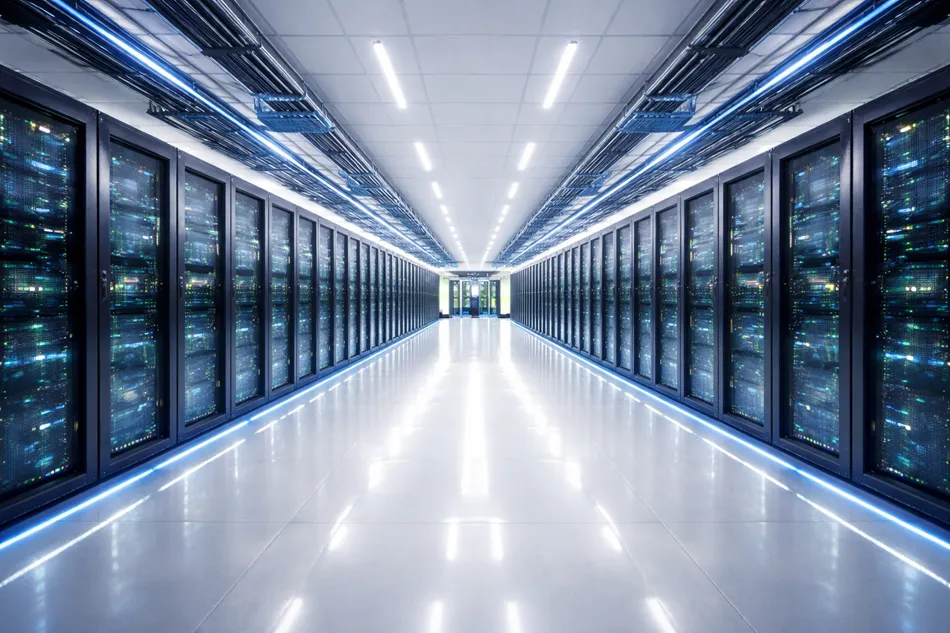
With the acceleration of digital transformation, data centers have become a critical infrastructure for many sectors, from banking and e-commerce to healthcare and manufacturing. One of the most important parameters determining the continuity of this infrastructure is data center cooling performance. Servers, network equipment, and power electronics generate significant heat during operation; if this heat is not removed effectively, performance declines, hardware life is shortened, and the risk of downtime increases. For this reason, cooling in data centers is not merely a comfort-oriented HVAC application, but an engineering discipline that must be designed with a focus on business continuity and operational security.
VEGA Chiller aims to meet the needs of data centers under a single solution framework by offering scalable industrial chiller systems with high efficiency, redundancy, sustainable energy management, and remote monitoring capabilities. In this guide, we explain data center cooling approaches, how data center chiller systems should be selected, and the optimization methods that reduce operating costs.
Chiller Data Center Cooling: Why Is Chiller-Based Data Center Cooling a Critical Application?
Data centers operate 24/7, and their heat load is often not constant. Variations in IT load, fluctuations in ambient conditions, and future capacity expansion require cooling systems to respond dynamically. When data center cooling is inadequate, the following risks arise:
- Reduced processor performance due to thermal throttling
- Premature failure of server components and reduced hardware lifespan
- Formation of rack-level hot spots and increased operational risk
- Higher energy consumption and deterioration of PUE
- SLA violations and financial losses caused by downtime
For this reason, the objective in data center cooling design is not simply achieving low temperature, but balancing stability, redundancy, scalability, and energy efficiency.
Data Center Chiller Systems: Basic Architecture and Operating Principle
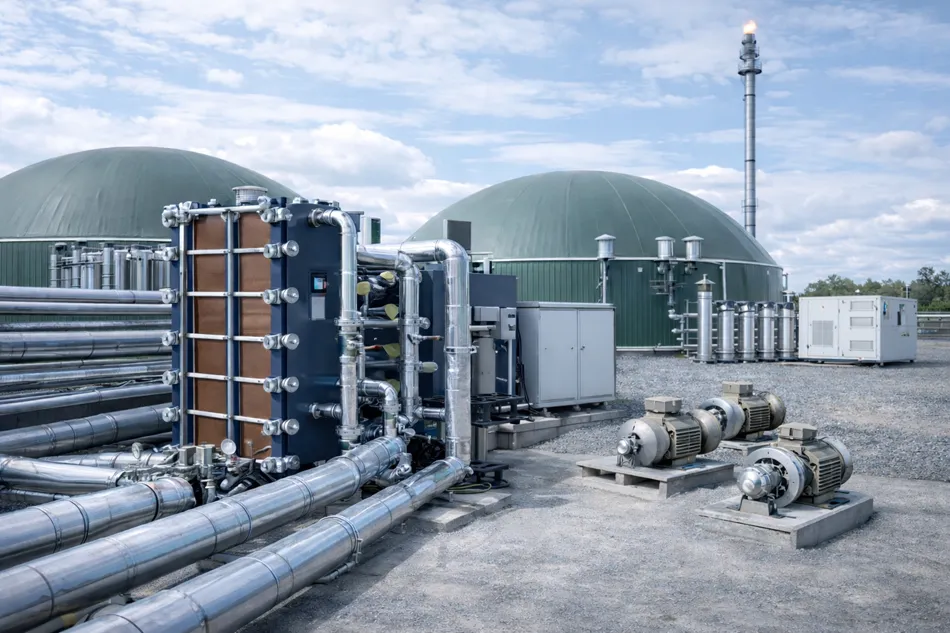
In data centers, chillers typically produce chilled water to serve CRAC/CRAH units, AHUs, or In-Row cooling solutions. The chiller system removes heat from the process side (the data center side) and rejects it to the outside environment through the air side or water side. This configuration creates a more stable and manageable cooling infrastructure at high capacities.
Units Served by Chillers in Data Centers
- CRAH (Computer Room Air Handler): operates with chilled-water coils
- AHU (Air Handling Unit): for large-volume air conditioning applications
- In-Row and Rear Door Heat Exchanger solutions for high-density racks
- Liquid cooling infrastructures for high-TDP servers and HPC scenarios
Chiller Selection in Data Center Cooling: Capacity, Redundancy, and Efficiency
Why Is Proper Capacity Planning Important?
Capacity planning in a data center should not be based only on today’s IT load. Growth scenarios, increasing density, and different load profiles must also be considered. Incorrect capacity selection leads to two opposite problems: undersizing causes risky temperature rise, while oversizing results in unnecessary capital cost and poor part-load efficiency. In the chiller capacity calculation process, total IT load, UPS losses, lighting, occupancy load, ambient conditions, and safety margin should all be evaluated.
Redundancy: N, N+1, and 2N Approaches
In data centers, cooling infrastructure is usually designed with redundancy. The most common approaches are:
- N: minimum required capacity, without redundancy
- N+1: fault tolerance with at least one standby unit
- 2N: fully redundant parallel infrastructure for highly critical facilities
In VEGA Chiller data center projects, redundancy architecture is configured according to the target Tier level, SLA requirements, and operating strategy.
Part-Load Efficiency and Inverter Technologies
Data centers rarely operate at full load all the time. For this reason, the most critical factor affecting chiller efficiency is part-load performance. Inverter-controlled compressors, fans, and pumps respond more precisely to load changes and reduce energy consumption. With proper control algorithms, total energy consumption can typically be improved by 20–30%.
Free Cooling and Hybrid Solutions: Strategies That Improve Energy Efficiency
One of the most effective optimization methods in data center cooling is the free cooling approach. When outdoor conditions are suitable, cooling can be provided by reducing compressor load or bypassing compressor operation altogether. This method can significantly reduce annual energy consumption, especially in cooler climates.
Dry Cooler / Adiabatic System Integration
Dry coolers or adiabatic-assisted solutions reduce the load on the chiller during certain periods. This lowers both energy consumption and compressor operating hours. In data center cooling design, climate data and operating setpoints must be analyzed correctly in order to plan this integration properly.
Setpoints and Temperature Strategy
Lower setpoints do not always mean safer operation; they may increase energy consumption and make humidity control more difficult. The correct approach is to define a target temperature window based on ASHRAE recommendations, equipment tolerances, and operational strategy.
PUE Improvement: Measurable Gains on the Cooling Side
PUE (Power Usage Effectiveness) is the primary metric used to evaluate the energy efficiency of a data center. The cooling system is one of the largest contributors affecting PUE. To improve PUE:
- Select chillers with high part-load efficiency
- Use variable-flow pump control (VFD)
- Apply smart automation and setpoint optimization
- Integrate free cooling and hybrid operating modes
- Reduce hot spots through airflow management (hot aisle / cold aisle)
These measures provide both energy savings and more stable operation.
Maintenance and Operation: Continuity in Data Center Chiller Systems
Maintenance in a data center must be planned and measurable. If chiller maintenance is neglected, efficiency decreases, failure risk rises, and SLA targets are put at risk. In the VEGA Chiller approach, maintenance is carried out together with performance measurement and record tracking.
What Should Be Checked During Periodic Maintenance?
- Condenser/evaporator cleaning and heat transfer inspection
- Refrigerant pressure checks, leak testing, and charge verification
- Compressor oil level and oil quality checks
- Pump/fan bearing inspection and electrical measurements
- Sensor calibration, alarm log analysis, and control panel testing
- Performance verification through flow and ΔT measurements
Remote Monitoring and Alarm Management
A preventive approach is essential in data centers. Remote monitoring enables early detection of potential risks through data such as temperature, pressure, current, and operating hours. Automatic alarm scenarios and trend analysis help the operations team make rapid decisions.
VEGA Chiller’s Engineering Approach to Data Center Cooling Projects
VEGA Chiller approaches data center cooling projects not only as a chiller supply scope, but as a complete solution covering capacity planning, redundancy architecture, control strategies, and commissioning processes. The goal is to support scalable data center growth while keeping energy costs under control.
Site Survey and Design
The most suitable chiller architecture is determined by analyzing IT load profile, growth scenarios, climate conditions, and operational targets.
Commissioning and Performance Verification
During commissioning, flow, ΔT, temperature stability, and part-load efficiency are measured and optimized. In this way, sustainable efficiency and operational reliability are achieved in the data center.
Data Center Cooling Is Secured with the Right Chiller System
Cooling in data centers is a core component of performance, operational security, and cost management. With proper capacity planning, N+1 redundancy, free cooling integration, intelligent control, and regular maintenance, data center cooling costs can be reduced, PUE can be improved, and downtime risk can be minimized. VEGA Chiller solutions deliver long-term value to data center projects through scalable, efficient, and reliable chiller infrastructures.