


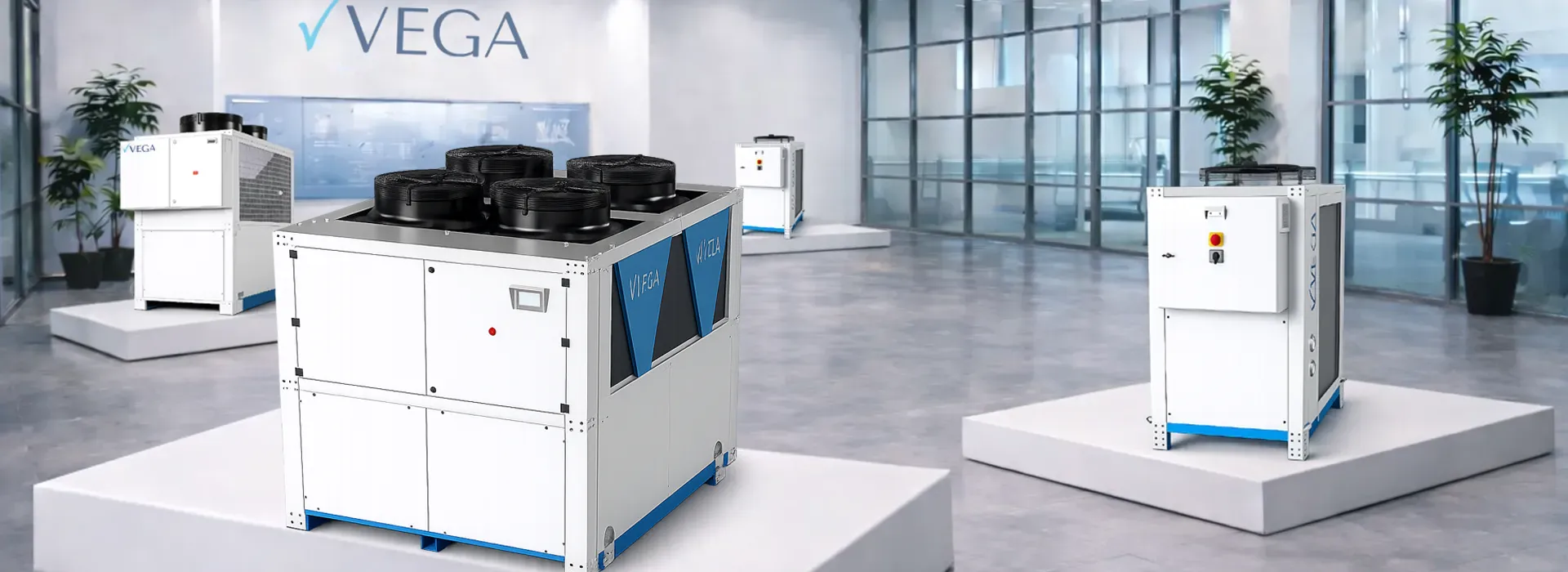
Chiller Sales
Chiller Sales: Correct Equipment Selection, Project Planning, and Quotation Process in Industrial Cooling Systems with VEGA Chiller
In industrial facilities, cooling is a critical infrastructure element in terms of production quality, process continuity, and energy efficiency. For this reason, the chiller sales process should not be considered merely as purchasing a product. When the right chiller selection is evaluated together with capacity calculation, application scenario, environmental conditions, hydronic infrastructure, energy targets, and service planning, it reduces the company’s total cost and ensures long-term reliability.
VEGA Chiller positions its chiller sales approach not as simply selecting a product from a catalog, but as developing an engineering-based solution. The goal is to identify the most suitable industrial chiller system for your operation, configure the right options, plan the installation and commissioning processes, and establish the technical infrastructure that will ensure the unit operates efficiently for many years. In this comprehensive guide, we explain the chiller sales process from start to finish and present the critical criteria for correct unit selection, quotation steps, and the technical details that influence the investment decision within a professional framework.
What Is Chiller Sales? Why Is “Correct Selection” at the Center of the Sales Process?
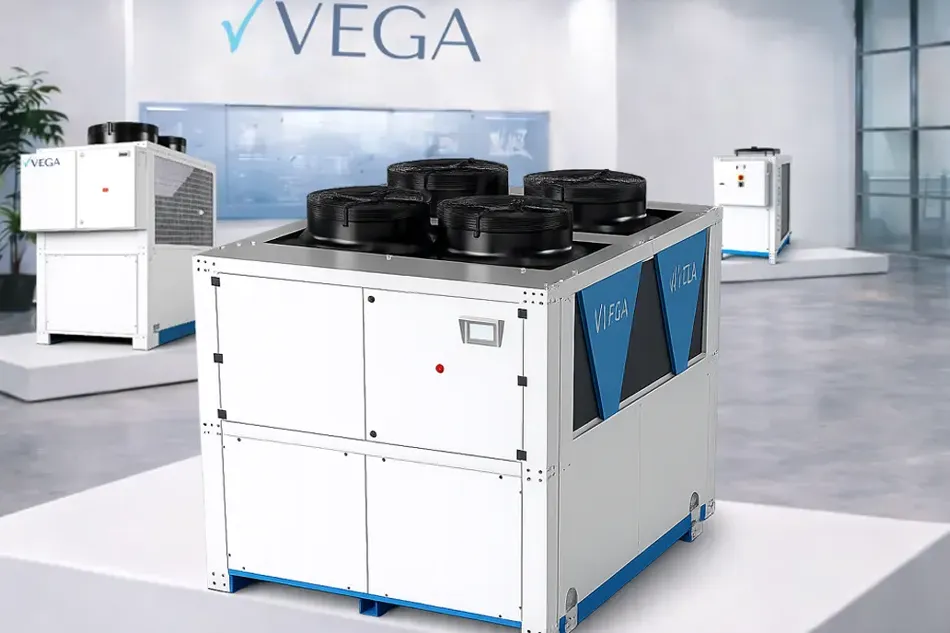
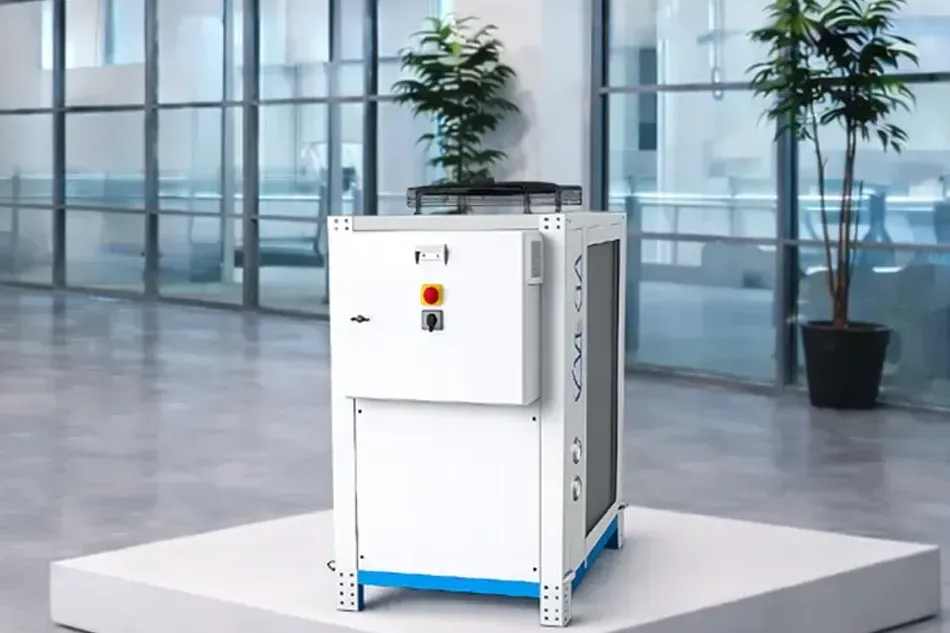
Chiller sales is the process of identifying, engineering, quoting, and delivering a chiller unit with the appropriate capacity and the right technology for process cooling or building air-conditioning needs. However, in industrial cooling, an incorrectly selected chiller may seem like a lower-cost investment in the short term, but in the long run it can create high operating costs and a greater risk of failure.
When the right chiller selection is not made, the following problems are commonly encountered:
- Insufficient capacity: The system cannot maintain the setpoint, production quality decreases, and machine/process failures increase
- Oversized capacity: Unnecessary investment cost, poor part-load efficiency, and high energy consumption
- Incorrect type selection: Wrong choice between air-cooled and water-cooled systems, leading to performance loss under actual site conditions
- Incompatible hydronic design: Inadequate flow, freezing risk, low ΔT, and pump-related energy losses
- Lack of service and spare parts planning: Longer downtime and higher operational risk
For this reason, VEGA Chiller starts the sales process with technical site assessment and accurate engineering calculations. The goal is not only for the chiller to “operate,” but to operate at its most efficient point and with the lowest total cost of ownership.
VEGA Chiller Sales Scope: A Project-Based End-to-End Approach
VEGA Chiller’s sales service can be structured modularly according to the customer’s needs. In simple applications, a standard chiller selection may be sufficient, while in critical processes, comprehensive analysis, redundancy planning, and automation integration may be required.
1) Site Survey and Needs Analysis
The first step in chiller selection is to clearly define the needs of the process or facility. During the survey stage, the following information is evaluated:
- Type of application: process cooling or HVAC air conditioning?
- Target water/glycol temperature (supply-return), setpoint tolerance
- Required flow rate, target ΔT, and existing hydronic infrastructure
- Environmental conditions: ambient temperature, layout, dusty/chemical atmosphere
- Operating schedule: 24/7, shift-based, or seasonal?
- Problems experienced in the existing system: failures, capacity loss, energy consumption
- Growth plan and future capacity requirements
2) Chiller Capacity Calculation and Verification
Chiller capacity calculation is the most critical technical step in the sales process. Capacity should not be considered only as “kW.” The process heat load, environmental conditions, and load profile must be evaluated together. In addition, part-load operating behavior is important in terms of efficiency and control stability.
The following parameters are typically used in capacity calculation:
- Required process heat load (kW / kcal/h)
- Supply-return temperatures and target ΔT
- Flow requirement and pressure losses
- Ambient design temperature (summer-winter scenarios)
- Potential future loads and expansion allowance
Incorrect capacity selection both increases energy costs and reduces process reliability. In the VEGA Chiller sales process, capacity is verified, where possible, using field data and process measurements.
3) Air-Cooled or Water-Cooled Chiller?
One of the most frequently asked questions in chiller sales is whether to choose an air-cooled or water-cooled system. Both types have advantages, and the selection should be based on the project’s conditions.
- Air-cooled chiller: Easy installation, no water consumption, practical maintenance management, suitable for outdoor use
- Water-cooled chiller: High efficiency at large capacities, advantage under continuous load, but requires a cooling tower and water treatment
When operated correctly, water-cooled systems may offer an energy-efficiency advantage; however, they require disciplined water management and maintenance. Air-cooled systems, on the other hand, offer the advantage of faster commissioning with simpler infrastructure.
4) Compressor Technology Selection: Scroll or Screw?
Chiller performance and reliability are closely related to compressor selection. In the VEGA Chiller sales process, the appropriate technology is recommended by evaluating the capacity range, load profile, and sound requirements.
- Scroll compressor: Medium capacity, quiet operation, ease of maintenance, modular structure
- Screw compressor: High capacity, durability under demanding conditions, strong performance under continuous load
- Two-stage / multi-compressor systems: Advantages in part-load efficiency and redundancy
Application Note: Part-Load Efficiency Is a Decisive Factor in the Sales Decision
Many facilities do not operate at full capacity for a significant part of the day or year. For this reason, when selecting a chiller, not only maximum capacity but also part-load efficiency should be evaluated. Proper staging, inverter solutions, and control algorithms directly affect energy costs.
Technical Configuration in Chiller Sales: Options and Proper Packaging
In the chiller sales process, whether the unit is configured as “standard” or “optional” determines the success of the project. Incorrect option selection may lead to unnecessary costs or on-site incompatibility. VEGA Chiller recommends options according to the application scenario.
1) Integrated Pump and Water Tank (Monoblock Solution)
In projects where ease of installation and a compact structure are desired, an integrated pump and tank reduce on-site labor and commissioning time. However, pump head and flow requirements must be selected correctly.
2) Low-Temperature Kit and Glycol Solutions
If the process requires low temperatures (for example, below 0°C or in outdoor areas exposed to freezing risk), a low-temperature kit, an appropriate control strategy, and the correct glycol ratio should be planned. While glycol reduces freezing risk, it also affects pump selection and heat transfer.
3) Remote Monitoring, BMS/SCADA Integration
In industrial facilities, remote monitoring provides a major advantage for identifying pre-failure symptoms and enabling fast intervention. Integrating the chiller with BMS/SCADA strengthens alarm, trend, and energy monitoring processes.
4) Acoustic Solutions and Quiet Operation Package
Especially in urban facilities, hotels, hospitals, or areas with high acoustic sensitivity, chiller sound level can be critical. Solutions such as quiet fan selection, night mode, acoustic barriers, and vibration isolators should be evaluated at the beginning of the project.
Chiller Sales Process: Step by Step from Quotation to Delivery
A professional chiller sales process clarifies the customer’s technical requirements and minimizes surprises on site. VEGA Chiller’s sales approach proceeds through the following steps:
1) Technical Information Collection and Site Survey
Information is collected regarding the application, capacity, temperature targets, layout, and infrastructure. If necessary, a site visit is carried out.
2) Preliminary Selection and Engineering Verification
The appropriate chiller type is determined; capacity, flow rate, pressure losses, and environmental conditions are verified.
3) Quotation and Technical Specification
The quotation is prepared to include the unit model, capacity range, options, delivery time, commissioning scope, and service conditions. In addition, technical specifications and drawings (if required) are shared.
4) Production, Testing, and Shipment
After production, the chiller unit undergoes testing. Performance verification and quality control are critical for smooth commissioning on site.
5) Installation, Commissioning, and Training
After the unit is installed on site, commissioning is carried out; setpoint verification, alarm scenarios, and performance measurements are completed. Training on operation and maintenance is provided to the operating team to ensure sustainable performance.
Total Cost of Ownership in Chiller Sales: Evaluation Beyond Price
The “chiller price” often becomes the main focus of the decision; however, the correct approach is the total cost of ownership. This cost consists of the sum of initial investment + energy consumption + maintenance/service + possible downtime costs. Even if a chiller has a low purchase price, it may become more expensive within a few years if its energy consumption is high.
Energy Efficiency Criteria (COP/EER and Part-Load Behavior)
In the purchasing decision, COP/EER values, part-load efficiency, inverter solutions, and proper control algorithms should be evaluated. Especially in facilities operating 24/7, even small differences in efficiency can create major changes in annual cost.
Service and Spare Parts Availability
In chiller sales, the service organization, spare parts availability, and maintenance plan should also be considered. Long downtime can create a cost far greater than the unit price itself due to production loss.
Which Industries Do We Serve with Chiller Sales?
VEGA Chiller provides chiller solutions tailored to the different needs of different industries:
- Plastic injection and extrusion processes
- Food and beverage production and process cooling
- Chemical-pharmaceutical and reactor cooling applications
- HVAC air conditioning (hotels, shopping malls, hospitals, offices)
- Data center and critical infrastructure cooling
- Printing-packaging, laser cutting, and metal processing
Why Does VEGA Chiller Make a Difference in Chiller Sales?
VEGA Chiller’s sales approach is not just about selling a unit; it is about ensuring that the project works correctly.
- Engineering-focused selection: The right product through capacity calculation and application analysis
- Project-based configuration: Correct packaging of options according to actual needs
- Quality and testing approach: Pre-shipment verification for trouble-free commissioning on site
- Service support: Commissioning, maintenance planning, and long-term service organization
- Energy efficiency: Part-load optimization and control strategies
Conclusion: The Right Chiller Purchasing Decision Determines Your Facility’s Efficiency for Years
Chiller sales is a strategic investment in industrial facilities. A chiller selected with the right capacity, the right technology, the right options, and the right service plan increases production continuity, reduces energy costs, and extends equipment life. VEGA Chiller, with its engineering-based approach to chiller sales, identifies the most suitable solution for your operation and provides end-to-end support from quotation to commissioning.